
heattransferequipments.com > products > heat exchangers > cooling towers
HEAT EXCHANGERS & COOLING TOWER MANUFACTURER
Heat Transfer Equipment Pvt Ltd.,
HEAT EXCHANGERS
COOLING TOWERS
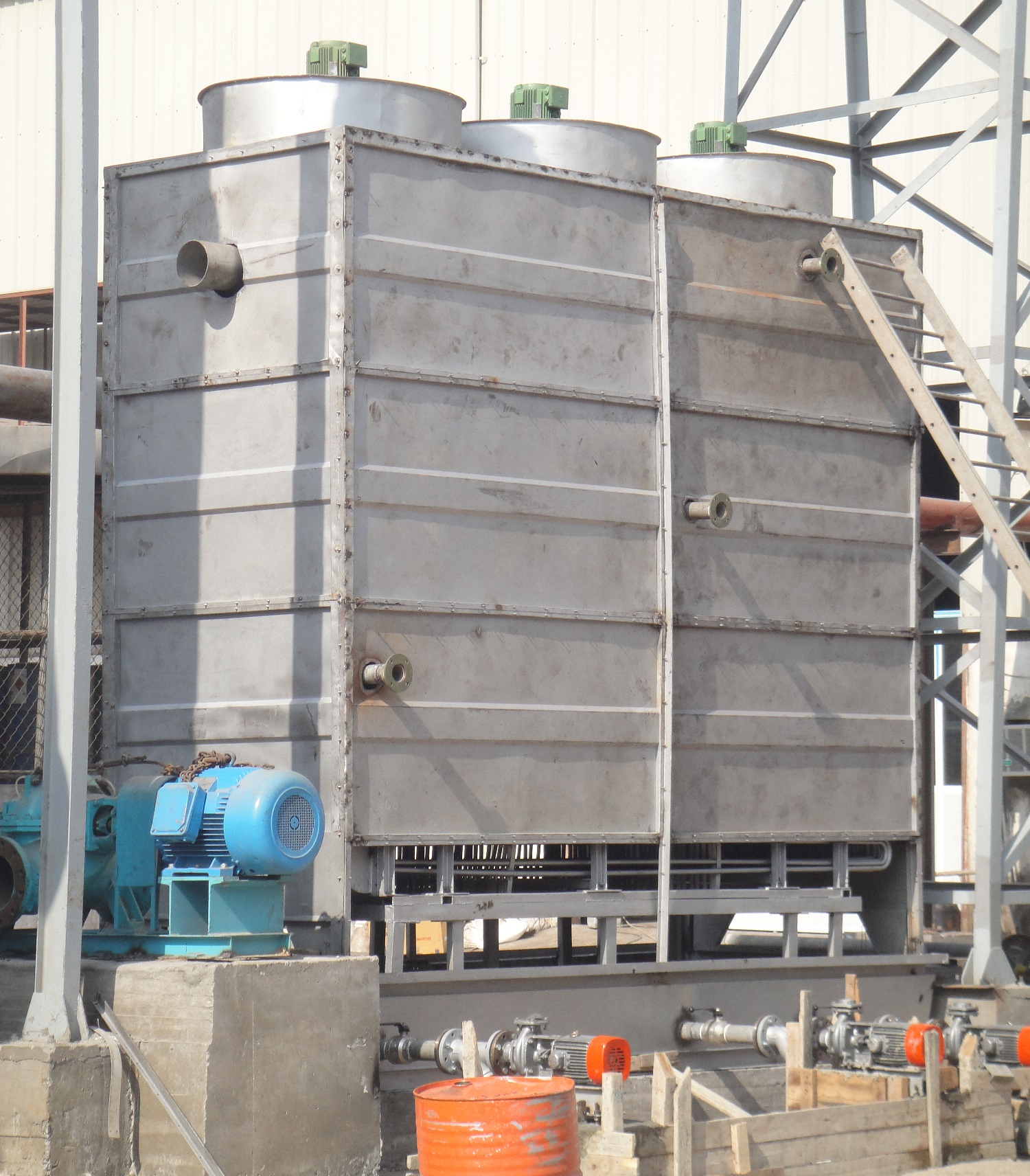
Closed Circuit Cooling Tower
A closed circuit cooling tower is an indirect heat-rejection system designed for industrial processes where the circulating process fluid needs to remain separated from the surrounding atmosphere and cooling water. In this arrangement, the process medium flows through a sealed heat-transfer coil while a separate water circuit removes heat from the coil surface. This closed-loop arrangement is particularly useful for processes where fluid cleanliness, controlled concentration, and reduced exposure to external contaminants are important.
Heat Transfer Equipments Pvt Ltd manufactures engineered cooling systems for industrial applications, with equipment configurations selected according to cooling duty, process-fluid characteristics, operating temperature, water quality, available space, and project requirements.
What Is a Closed Circuit Cooling Tower?
A closed circuit cooling tower uses a sealed coil to transfer heat from the process fluid to a secondary cooling-water circuit. The process fluid does not come into direct contact with atmospheric air or the tower water.
The process medium travels through the internal coil, while water is distributed over the external coil surface. Air movement across the wetted coil removes heat through a combination of sensible and evaporative cooling. The cooled process fluid can then be returned to the plant process while the secondary water circuit continues to operate independently.
This closed type cooling arrangement can be beneficial where direct-contact cooling could introduce contaminants, change fluid concentration, or increase fouling within the process circuit.
How Does a Closed Loop Cooling System Work?
The operation begins when the warm process fluid enters the heat-transfer coil. At the same time, circulating water from the tower basin is pumped to a spray distribution system positioned above the coil.
The water flows across the outside surface of the coil and absorbs heat transferred from the process fluid. Fans move air through the tower, allowing part of the circulating water to evaporate and reject heat to the atmosphere.
After losing heat, the secondary water returns to the basin and is recirculated. Meanwhile, the cooled process fluid leaves the coil and returns to the industrial process.
Because the two fluids remain separated, the process circuit can operate as a closed loop. This helps maintain the characteristics of the process medium and can reduce the possibility of contamination and process-side fouling.
Industrial Applications
Closed circuit cooling towers are suitable for industrial facilities where indirect heat rejection and process-fluid separation are required.
Typical applications include:
- Thermal power plants
- Oil and gas processing facilities
- Refineries and petrochemical plants
- Chemical and fertilizer industries
- Steel and metal processing plants
- Pharmaceutical manufacturing facilities
- Food and beverage processing
- Industrial refrigeration systems
- HVAC and utility cooling systems
- Machinery and equipment cooling
- Process cooling installations
Thermal power plants and other large process facilities can use closed-loop cooling arrangements where maintaining controlled process-fluid conditions is important.
Advantages of Closed Circuit Cooling Towers
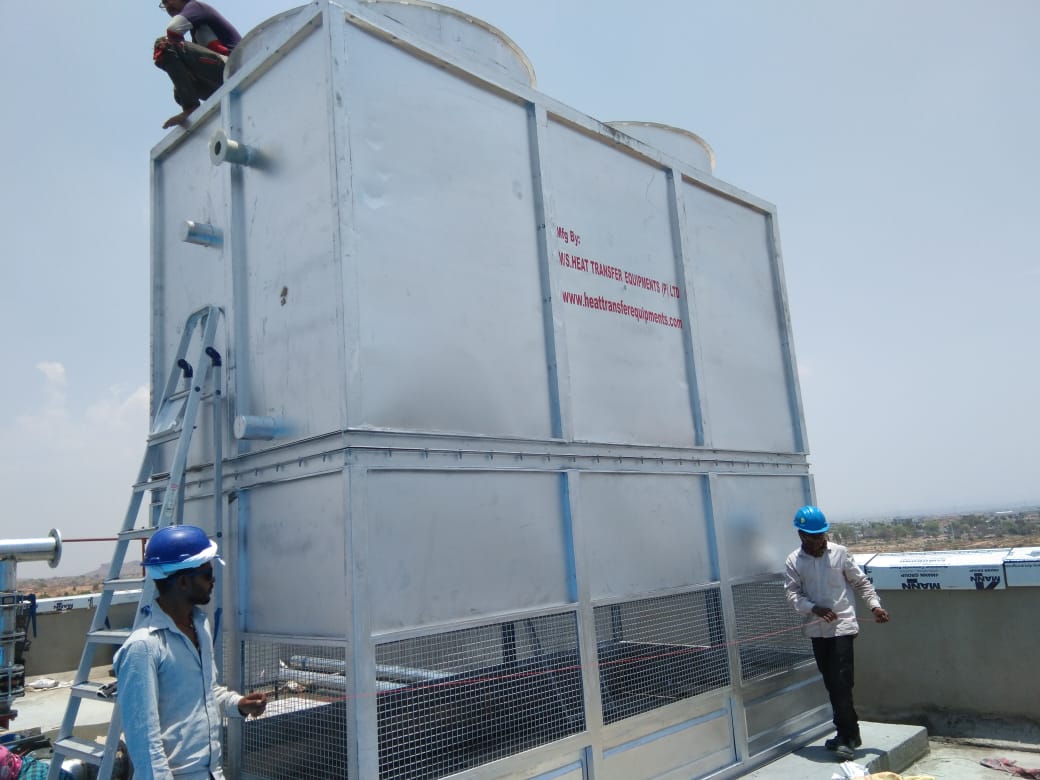
A properly selected closed circuit cooling tower can provide several operational advantages.
Process Fluid Separation
The process medium remains inside a sealed coil instead of being exposed directly to the tower atmosphere or secondary cooling water. This can help protect the fluid from unwanted contamination.
Reduced Process Fouling
Keeping the process fluid in a dedicated closed circuit can help reduce the introduction of suspended solids and other contaminants that may contribute to fouling.
Controlled Fluid Quality
The closed arrangement helps maintain the composition and cleanliness of the process medium, which can be important for sensitive industrial processes.
Reliable Heat Rejection
The combination of coil heat transfer, water circulation, and forced airflow provides an effective method for removing heat from industrial process fluids.
Water Management
A properly designed secondary water circuit can support efficient water circulation and reduce unnecessary water losses compared with some direct-contact cooling arrangements.
Flexible Operation
The system can be configured for different process fluids, cooling duties, temperature ranges, airflow requirements, and installation conditions.
Suitable for High-Temperature Duties
Depending on the equipment design, coil material, process fluid, and operating conditions, closed circuit cooling systems can be developed for elevated process-fluid temperatures. Applications may involve incoming fluid temperatures up to approximately 180°F (82.2°C) where the specified design is suitable for those conditions.
Materials of Construction
Material selection is determined by the process medium, operating temperature, cooling-water characteristics, corrosion conditions, and project specifications.
Depending on the application, components may be manufactured using carbon steel, stainless steel, galvanized steel, copper alloys, and other suitable engineering materials.
The heat-transfer coil requires particular attention because it separates the process fluid from the secondary cooling water. Its material and construction are selected according to thermal requirements, pressure conditions, corrosion resistance, and expected service environment.
Material specifications are finalized according to the actual design conditions rather than applying the same material combination to every cooling tower.
Design Considerations
Selecting a suitable closed-loop cooling system requires evaluation of several process and environmental parameters.
Important design inputs include:
- Required heat-rejection capacity
- Process-fluid flow rate
- Process-fluid inlet and outlet temperatures
- Cooling-water circulation rate
- Ambient air temperature
- Desired approach temperature
- Operating pressure
- Fluid properties
- Water quality
- Installation space
- Elevation and site conditions
- Fan and airflow requirements
The cooling tower should be sized according to the actual process duty. Correct selection helps prevent inadequate cooling, excessive equipment size, unnecessary water consumption, and inefficient operation.
Water chemistry should also be considered because scaling, corrosion, suspended solids, and biological growth can affect heat-transfer surfaces and spray components over time.
Why Choose Our Closed Circuit Cooling Towers?
Heat Transfer Equipments Pvt Ltd provides engineered cooling equipment based on application-specific requirements rather than a one-size-fits-all configuration.
Our design approach considers the process duty, operating conditions, fluid characteristics, required materials, plant layout, cooling-water arrangement, and maintenance requirements before finalizing the equipment configuration.
Depending on the project, the cooling system can be developed with suitable coil arrangements, fan systems, water distribution components, structural construction, piping connections, instrumentation, and control provisions.
Our focus is on providing practical industrial cooling solutions that can be integrated into existing or new process systems while supporting dependable operation and maintainability.
Maintenance and Reliable Operation
Regular inspection and maintenance are important for maintaining the thermal performance of a closed circuit cooling tower.
The heat-transfer coil, spray nozzles, basin, pumps, fans, drift eliminators, water distribution system, and associated controls should be inspected at suitable intervals.
Cooling-water quality should also be monitored to control conditions that may lead to scaling, corrosion, or biological growth. Keeping the coil surface and water distribution system clean helps maintain effective heat transfer.
Fan performance, pump operation, water levels, vibration, and unusual temperature changes should be monitored as part of routine maintenance.
A planned maintenance program can help identify developing issues early and support reliable long-term cooling performance.
Frequently Asked Questions
What is the difference between an open and closed cooling tower?
An open cooling tower exposes the circulating water directly to atmospheric air. In a closed circuit system, the process fluid remains inside a sealed coil and is cooled indirectly by a separate water and air circuit.
Why use a closed type cooling tower?
A closed type cooling arrangement can be useful when process-fluid cleanliness, controlled concentration, reduced contamination, or protection from atmospheric exposure is important.
Where are closed circuit cooling towers used?
They are used in thermal power, oil and gas, chemical, petrochemical, steel, pharmaceutical, manufacturing, refrigeration, HVAC, and other industrial applications.
Can a closed circuit cooling tower handle high-temperature process fluids?
It can be designed for elevated process-fluid temperatures depending on the required heat load, coil material, pressure, fluid properties, and other operating conditions. Specific temperature limits must be established during equipment design.
What information is required to select a closed circuit cooling tower?
Important information includes heat load, process-fluid flow rate, inlet and outlet temperatures, operating pressure, ambient conditions, cooling-water conditions, installation space, and material requirements.
Can the cooling tower be customized?
Yes. Equipment dimensions, coil configuration, materials, fan arrangement, water distribution system, connections, controls, and other features can be developed according to project requirements.
Do closed circuit cooling towers save water?
They can provide efficient water management because the process fluid remains isolated from the secondary water circuit. Actual water consumption depends on the cooling duty, ambient conditions, tower design, operating strategy, and water-management practices.
Do closed circuit cooling towers require maintenance?
Yes. Regular inspection of the coil, spray system, basin, fans, pumps, water quality, and associated components is necessary to maintain efficient and reliable operation.
Do you manufacture closed circuit cooling towers in India?
Yes. Heat Transfer Equipments Pvt Ltd manufactures engineered cooling equipment for industrial applications according to required cooling capacity, process conditions, materials, configuration, and project specifications.
Request a Quote for a Closed Circuit Cooling Tower
Looking for a closed circuit cooling tower for an industrial process?
Share your cooling capacity, process-fluid details, flow rate, inlet and outlet temperatures, operating conditions, maximum ambient temperature, and installation requirements with our engineering team.
Heat Transfer Equipments can provide a closed circuit cooling solution based on the required heat-rejection duty, operating conditions, process requirements, and site conditions.
Contact us to discuss your cooling requirement and receive a customized technical proposal and quotation.